
On Tuesday evening we wrote to you and said we were leaving for Jerusalem in the morning, and that every prayer that reached us before we left would travel with us.
We left. They travelled. This is where they went.
The Western Wall
We started at the Wall, which is where the day in Jerusalem tends to start.
Your prayers were printed and carried in hand. They were not abstractions by then. Each one had a name behind it. A sick child. A marriage under strain. A son who has stopped speaking to God. A diagnosis nobody in the family has said out loud yet. People we have never met, whose hardest sentences had been typed into a form at some late hour and sent to strangers in another country, trusting that someone would actually carry them.
We carried them.
Through the alleys, to the Holy Sepulchre
From the Wall the route goes up into the Old City — the narrow stone alleys of the Christian Quarter, worn smooth, close and shaded, opening suddenly into the courtyard of the Church of the Holy Sepulchre.
It is not a quiet place. It rarely is. Pilgrims from a dozen countries, several traditions sharing one roof, candles and incense and languages you cannot place. Your prayers went in with all of that.
The Garden Tomb
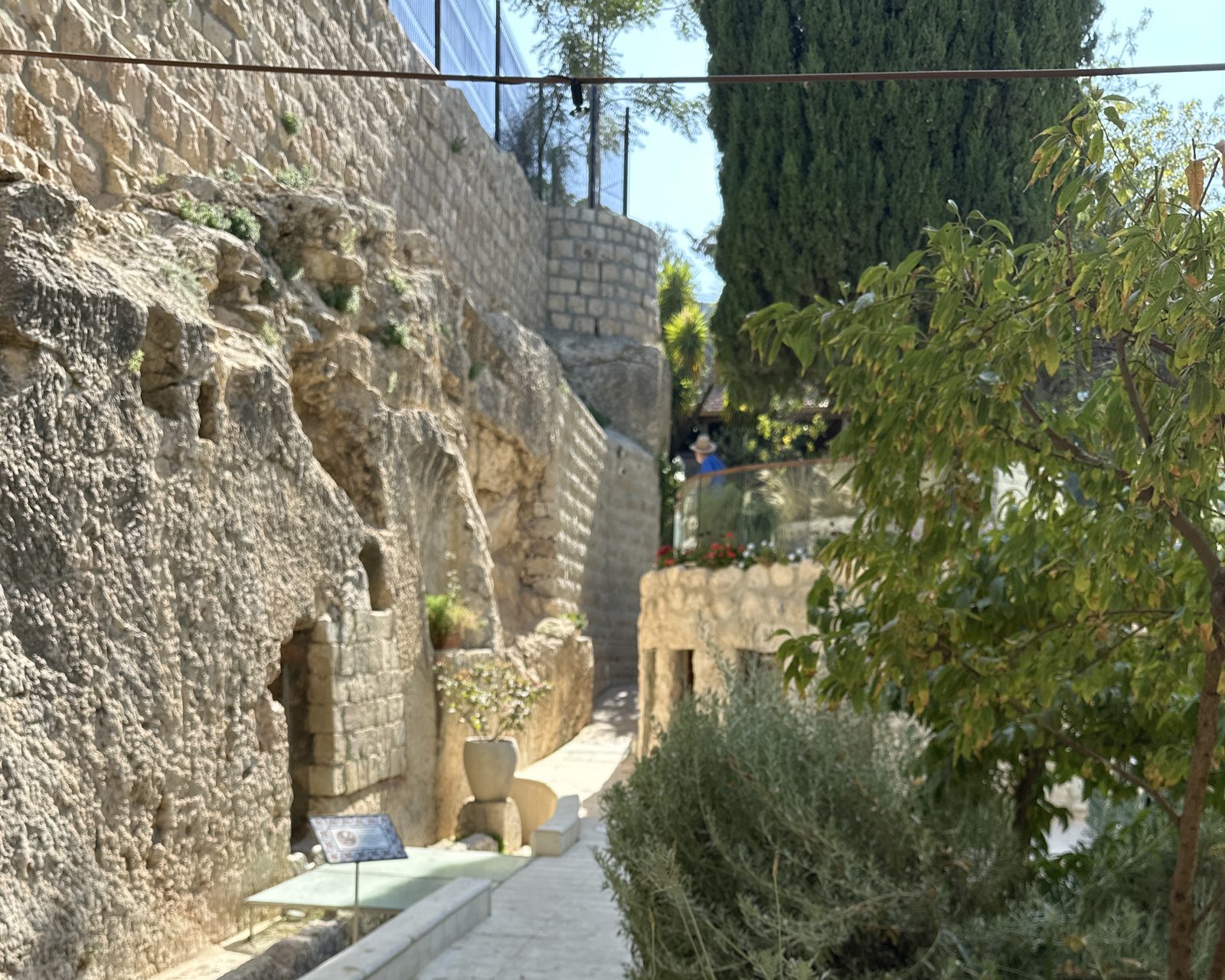
Then somewhere entirely different. After the density of the Old City, the Garden Tomb is pastoral — green, quiet, ordinary in the best sense. Birds instead of crowds. A garden with a tomb cut into rock at the edge of it.
Whatever you believe about which site is the true one, the Garden Tomb gives you something the churches cannot: room to stand still. Your prayers spent part of the afternoon there.
Gethsemane
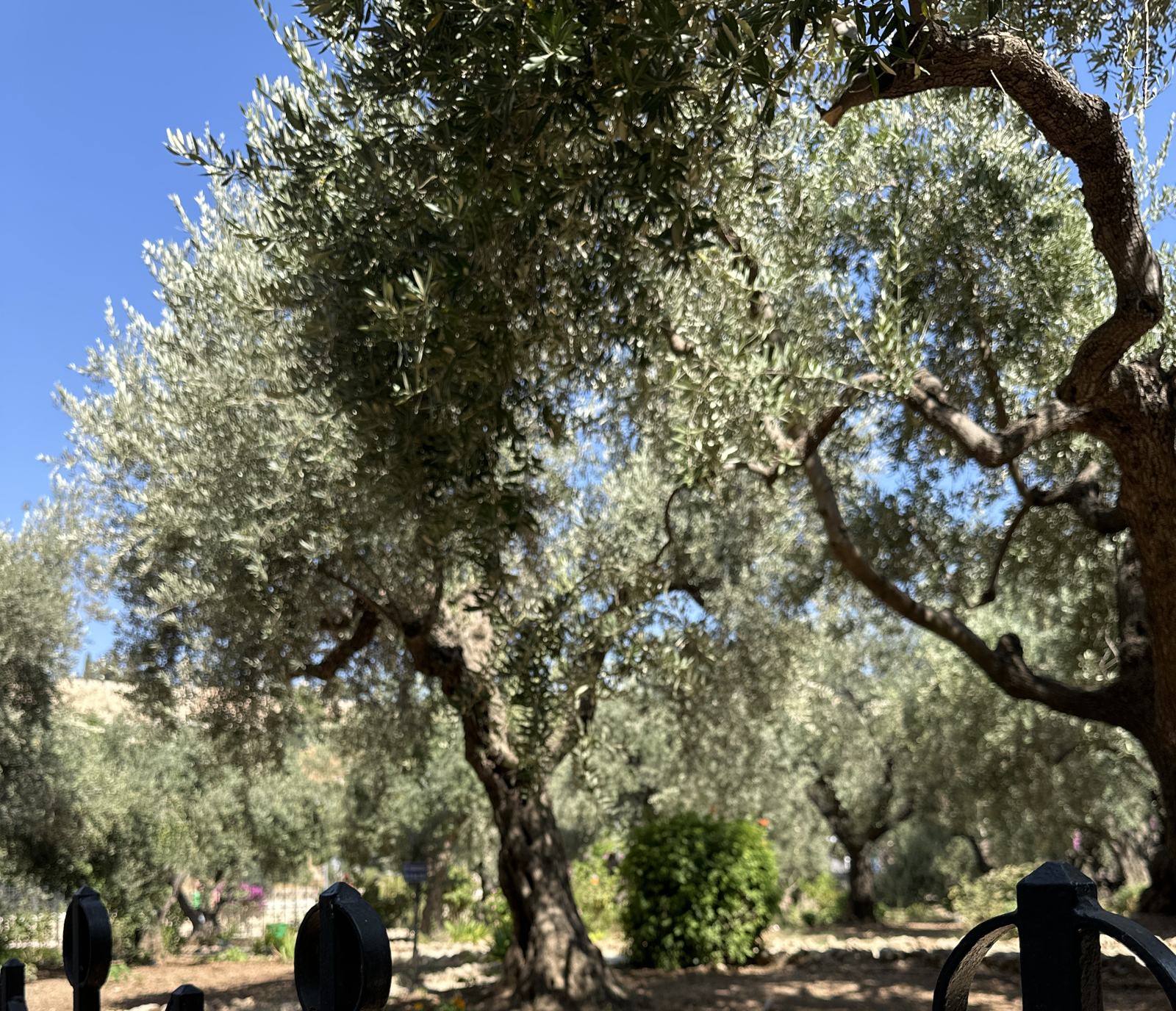
Down the slope to the olive grove, where the trees are old enough that it is hard not to think about who else stood among them. This is the place Jesus prayed the night He was betrayed, with His friends asleep nearby and His own request — let this cup pass from me — not answered the way He asked.
We think about that a lot when we carry your prayers here. Gethsemane is not a monument to prayers that got the outcome they wanted. It is where Jesus prayed in anguish and was not spared, and it is still the holiest praying anyone has ever done. If you have been praying a long time for something that has not changed, this is your ground too.
And last, the Mount of Olives
The day ended on the ridge above it all.
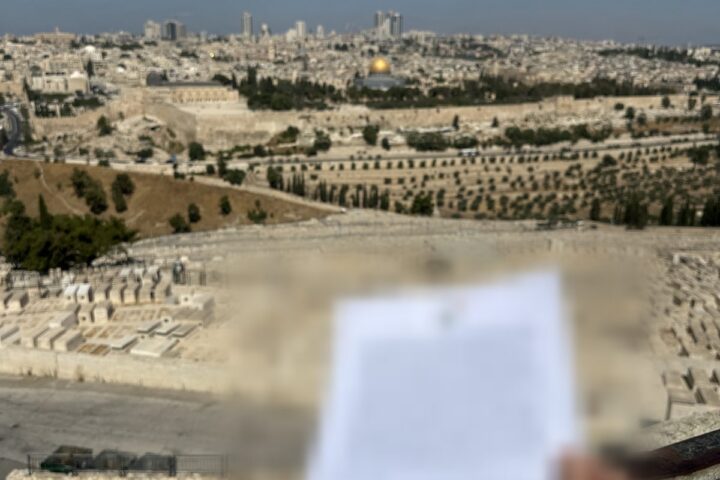
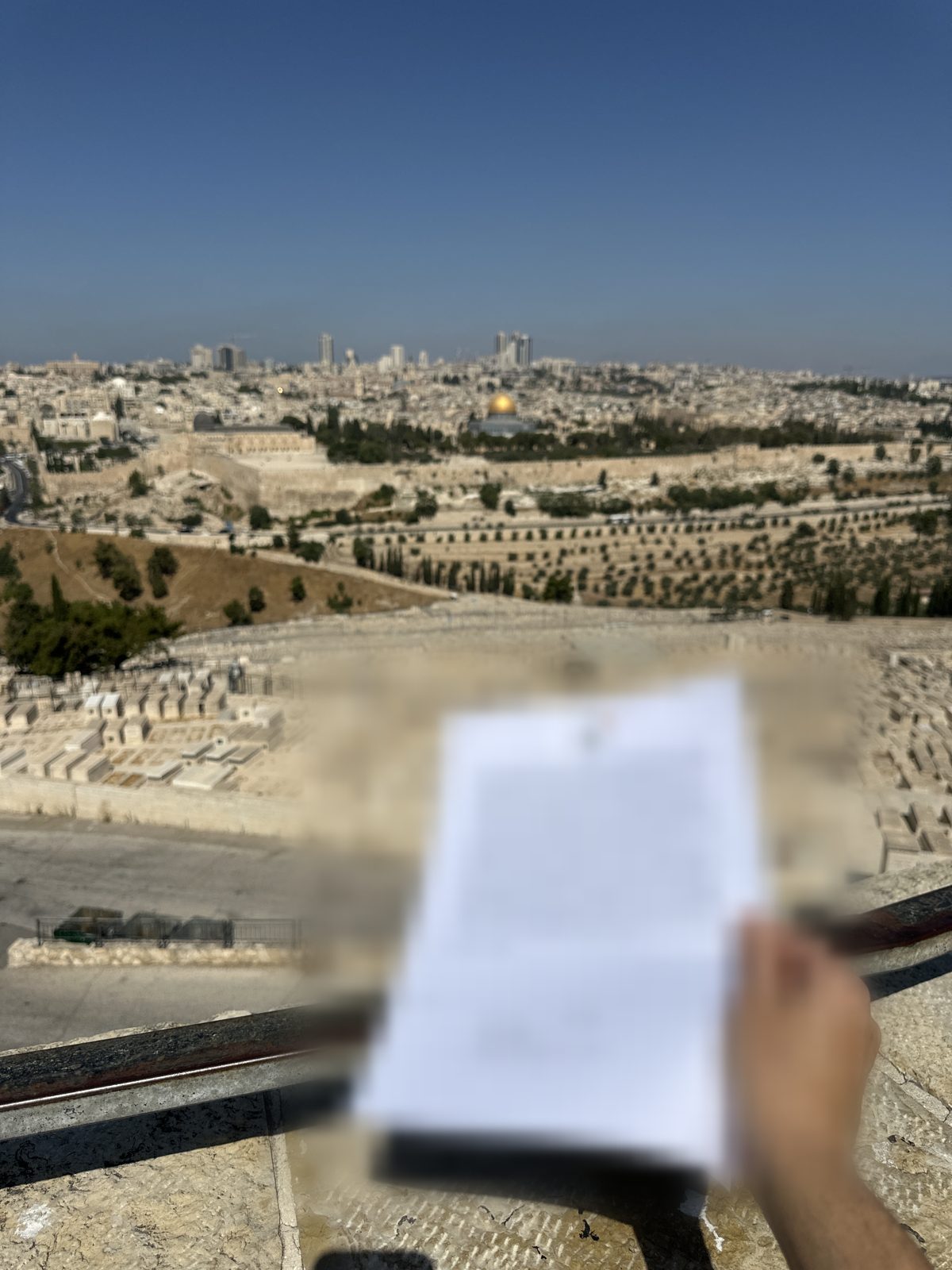
If you have never stood there, it is hard to describe how much you can see at once. The slopes of the mountain fall away in front of you, and across the Kidron Valley the whole Old City is laid out — the walls, the rooftops, the Dome of the Rock catching the light. From up there you can trace the entire day: the Wall down to the right, the alleys somewhere in that dense grey-gold mass, the gardens off to the north.
Every place your prayers had been that day, visible at once.
It is also the view Jesus had when He came over the ridge and wept over the city.
At each site, step by step
From Gabriel, our field representative, who carries the prayers.
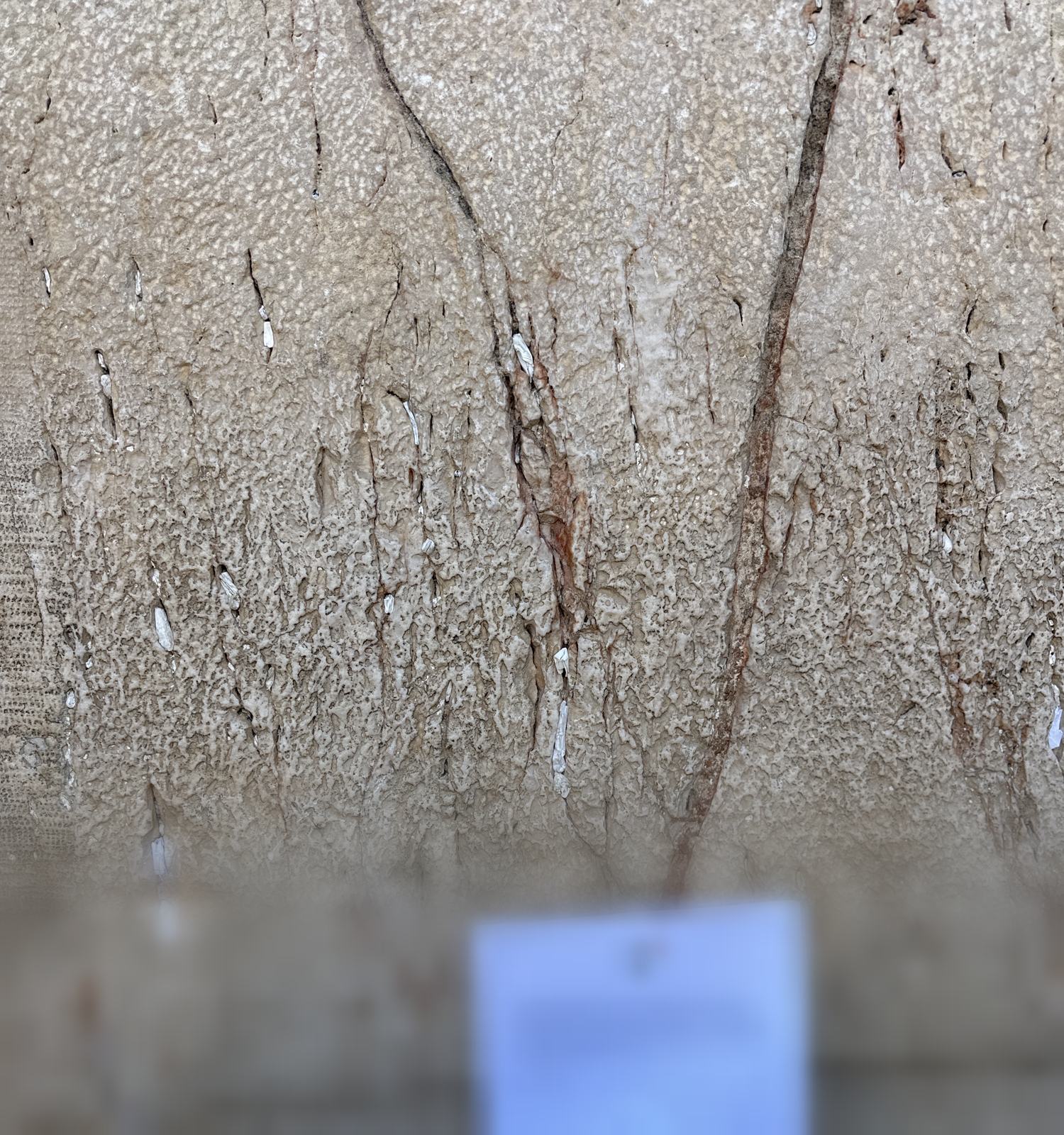
The Western Wall. The plaza is usually busy, and reaching the Wall itself means making our way gently through the people praying there. Each printed prayer is first photographed resting against the stones. Then it is folded and pressed into a gap between them, where it stays among the prayers of everyone who came before.
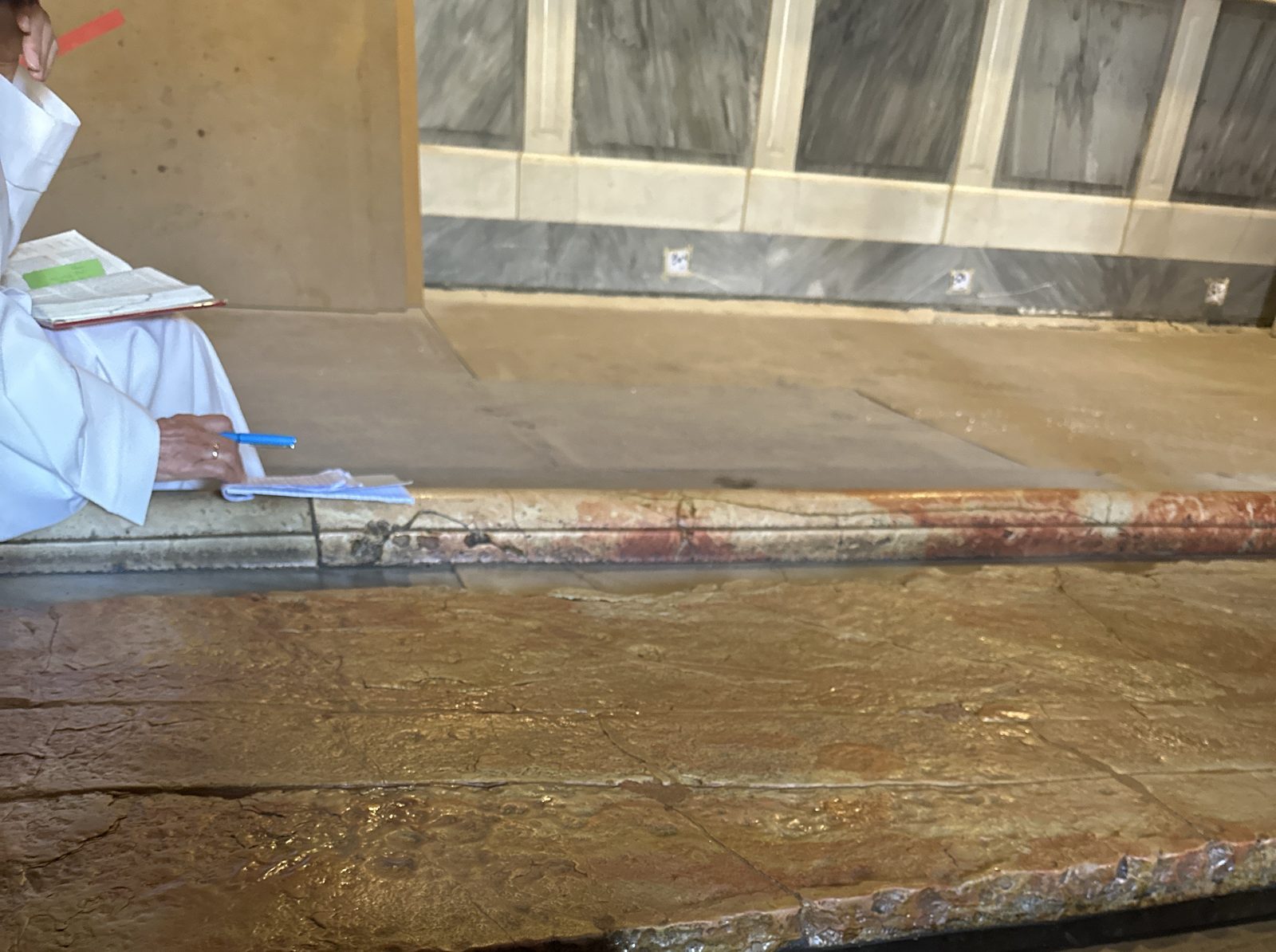
The Church of the Holy Sepulchre. Just inside the door lies the Stone of Anointing. We lay the prayers on it for a moment, and sometimes they come away marked with traces of the oil pilgrims pour over the stone. Here we light a candle beside every prayer we carry, and photograph the prayer by its flame. Afterwards, the prayers are placed in the church’s prayer box, where they are read by the priests who serve in the church.
The Garden Tomb. Photography is not allowed inside the rock-cut tomb, so prayers here are photographed just outside it. Sometimes a group of pilgrims is singing and praying under the vine arbour when we arrive, and when that happens we capture it too, sometimes on video.
The Garden of Gethsemane. We try to capture what makes this garden unlike anywhere else: its ancient olive trees, which tradition links to the night Jesus prayed here.
The Mount of Olives. The prayer is photographed against the panorama: the Old City across the valley, and the ancient cemetery on the slope below.
The prayers we carry
The requests that reach us are personal and intimate: for the wellbeing of children, friends and close family. Prayers about health, about relationships, about money worries, and for peace. Behind every one is a person hoping that something in their life, or in the life of someone they love, will change for the better.
Often the hope takes a small, familiar shape: a conversation, a door that opens, a moment when someone feels they are not alone. That is the place prayer can give to pain and to love: a place to say what is hard to put into words, and to keep hoping when the answers are not yet clear.
What we actually do, precisely
You deserve precision when you have trusted us with something private.
Your prayer is hand-delivered. It is carried to these places and brought before God there. It is not read aloud to a crowd and it is not displayed. The one exception is the Church of the Holy Sepulchre, where prayers are left in the church’s prayer box for the priests who serve there. Apart from that, what is written between you and the Lord stays between you and the Lord.
That is also why the writing is blurred wherever a prayer sheet appears in these pictures. That sheet is somebody’s real prayer. You are meant to see that it went — not what it said.
Why go at all
A fair question, honestly answered: God hears you from your kitchen table. He is not more able to hear you in Jerusalem than in Ohio or Manchester or São Paulo. Distance has never been the obstacle.
So this is not about God’s hearing. It is about yours.
There is something that happens in a person when they know that the words they could barely bring themselves to write were carried by real hands, through real alleys, to a real hillside. It makes the prayer feel less like shouting into a void. Scripture keeps telling us to remember — to build altars, to set up stones, to mark the places where God met us. We are people who forget. We need something we can point at.
Pray for the peace of Jerusalem: may those who love you be secure.
Psalm 122:6
For many of you, this is the nearest you will come to that ridge. We are glad to stand on it for you.
If you have been meaning to send one
Some of you read Tuesday’s email and thought about it, and then the evening got away from you. That happens. The invitation is still open.
Sending a prayer is free. It has always been free and it will stay free — we will never charge anyone for prayer. If you would like a photograph or a video from the site where your prayer was brought, that is available, and it is what pays for the travel and the printing and the time. But the prayer itself costs nothing, and if money is tight, send it anyway. That is what we are here for.
Whatever you are carrying this week — write it down and send it.
We go back next week. Every prayer that reaches us before then travels with us, and you will see where yours was taken — the same way you have just seen these. If you have been waiting for the right moment, this is it.