
The team left before the sun was properly up and came back in the
heat of the afternoon. Five sites, one morning, and a folder of prayers that had been
waiting since our last visit. This is where your words went.
August in Jerusalem does not forgive. By nine in the morning the stone is already
warm to the touch and the light comes off it white. We expected the sites to be empty.
They were not. At every one of them there were people who had come anyway, some who had
travelled a very long way to stand there for a few minutes, praying in the heat with
their hands on the stone. If you have ever wondered whether your prayer arrives somewhere
quiet and forgotten, it does not. It arrives into a crowd of people doing the same thing.
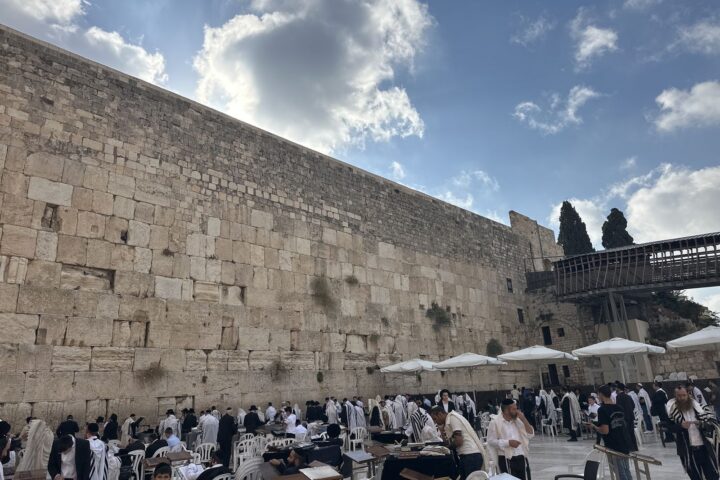
The Western Wall
The Western Wall is the last standing retaining wall of the Second Temple complex, and
it is the closest a person can come to the ground where the Temple itself stood. That is
why the plaza never really empties. The custom of folding a written prayer and pressing it
into a gap between the stones is old and completely ordinary here, which is exactly what
makes it extraordinary: the wall is full of other people’s words, packed into every crack
within reach.
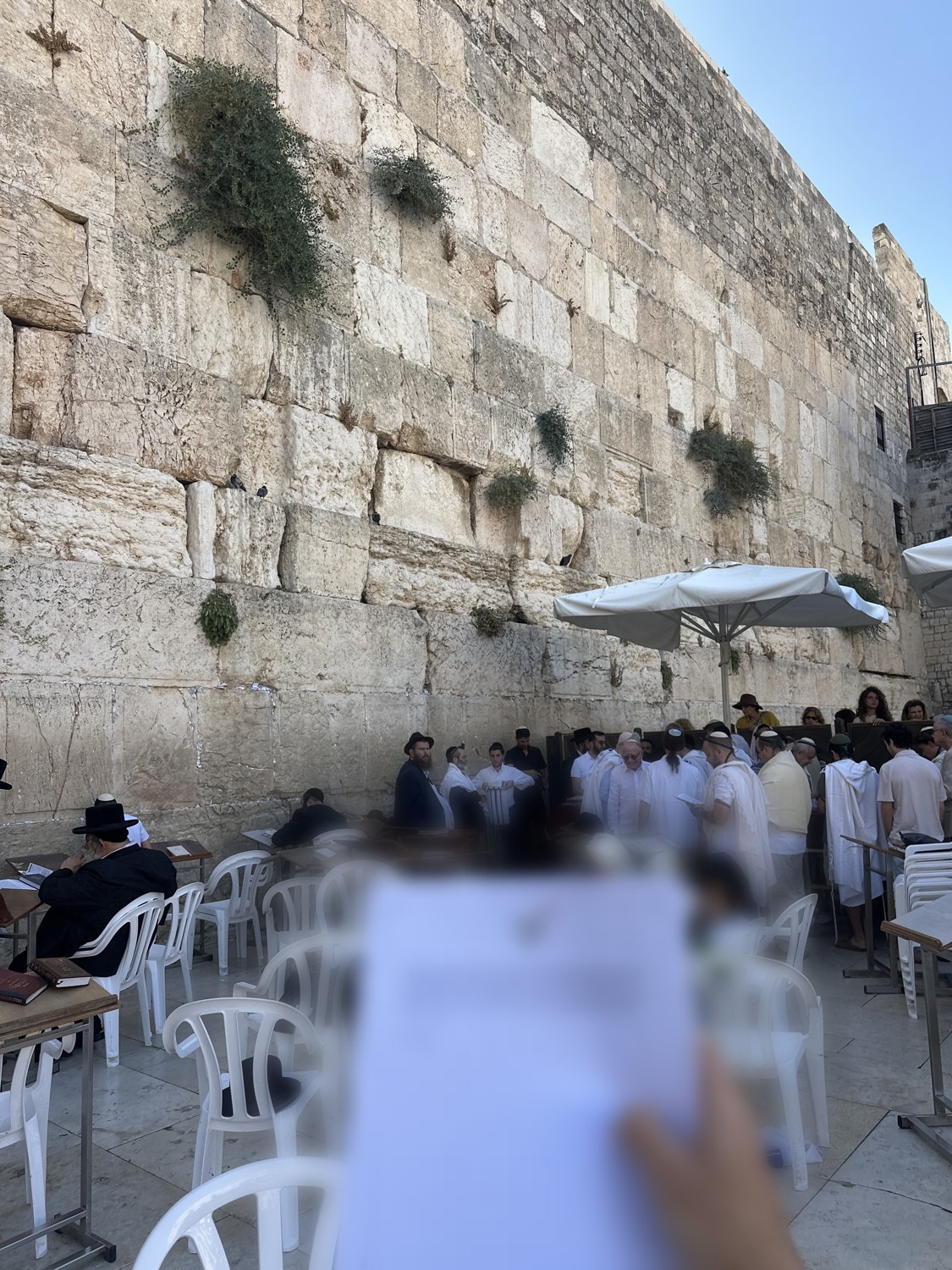
The plaza, and one of the prayers we carry. The words are blurred because they are not ours to show.
We started here, in the first usable hour of the day, and placed the prayers that had
asked for the Wall.
Half a minute of the plaza, filmed on the morning your prayers were
carried there.
The Church of the Holy Sepulchre
From the Wall we walked up through the Old City to the Church of the Holy Sepulchre,
which has been venerated since the fourth century as holding both Golgotha and the empty
tomb. Six Christian denominations share the building, and the arrangement between them is
so delicate that a ladder above the entrance has not been moved in generations.
The walk up, through the market. Pomegranates, shuttered doorways,
and the shade you take where you find it.
Just inside the church door is the Stone of Unction, where tradition holds that Jesus’
body was prepared for burial. People kneel to it, press their foreheads to it, lay small
objects on it. It is also, after the plaza, wonderfully cold. Thick stone, no sun,
centuries of shade. We stood there a while longer than the schedule allowed.
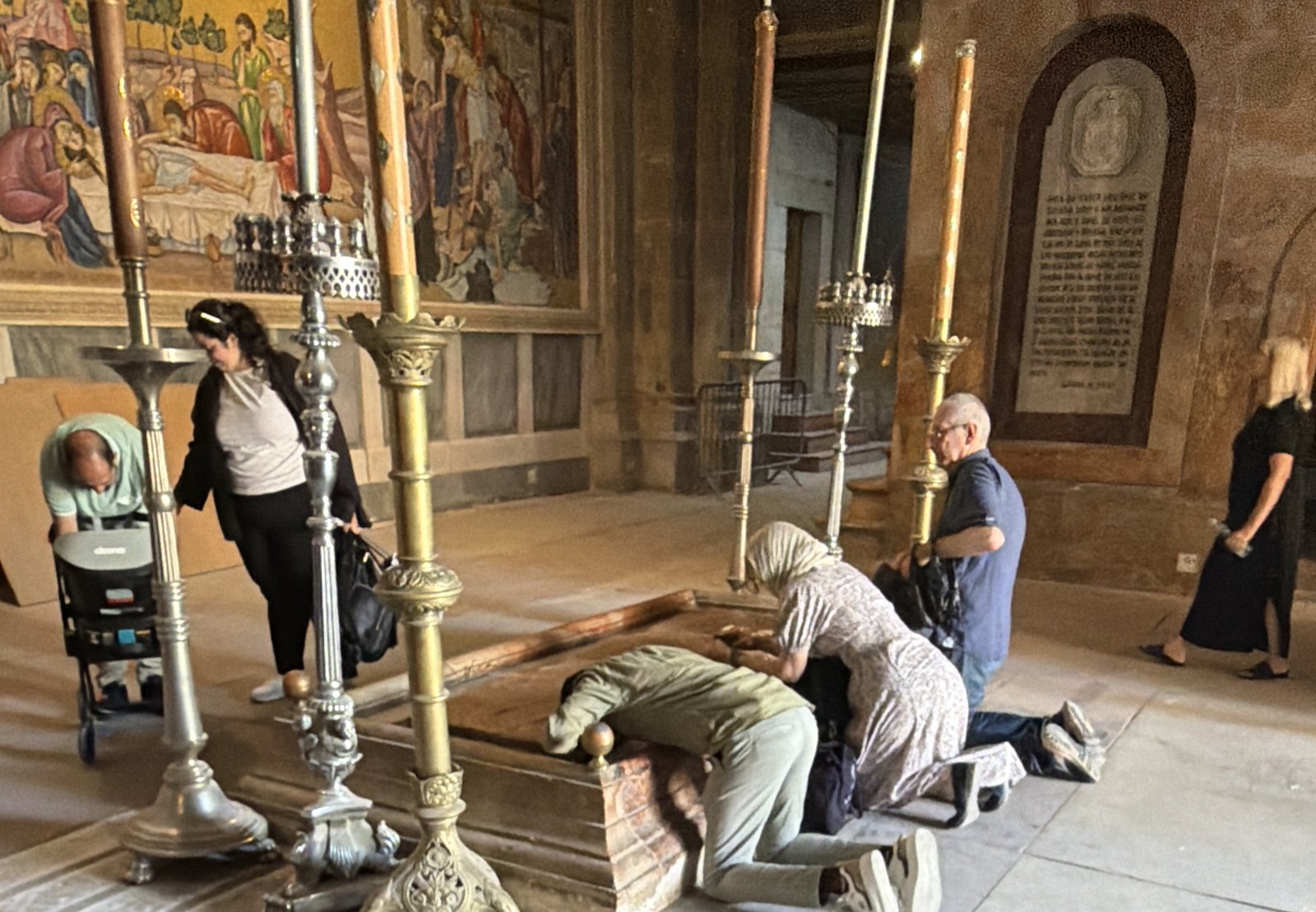
At the Stone of Unction. Nobody there was in a hurry.
The Garden Tomb
Outside the Old City walls, north of the Damascus Gate, there is a rock-cut tomb in a
quiet garden. The Garden Tomb was identified in the nineteenth century and many Protestant
and evangelical pilgrims find it the easier place to picture the morning of the
resurrection, because it looks like what the Gospels describe: a garden, a tomb cut into
rock, a stone track running along its face. It does not compete with the Holy Sepulchre so
much as offer a different kind of quiet.
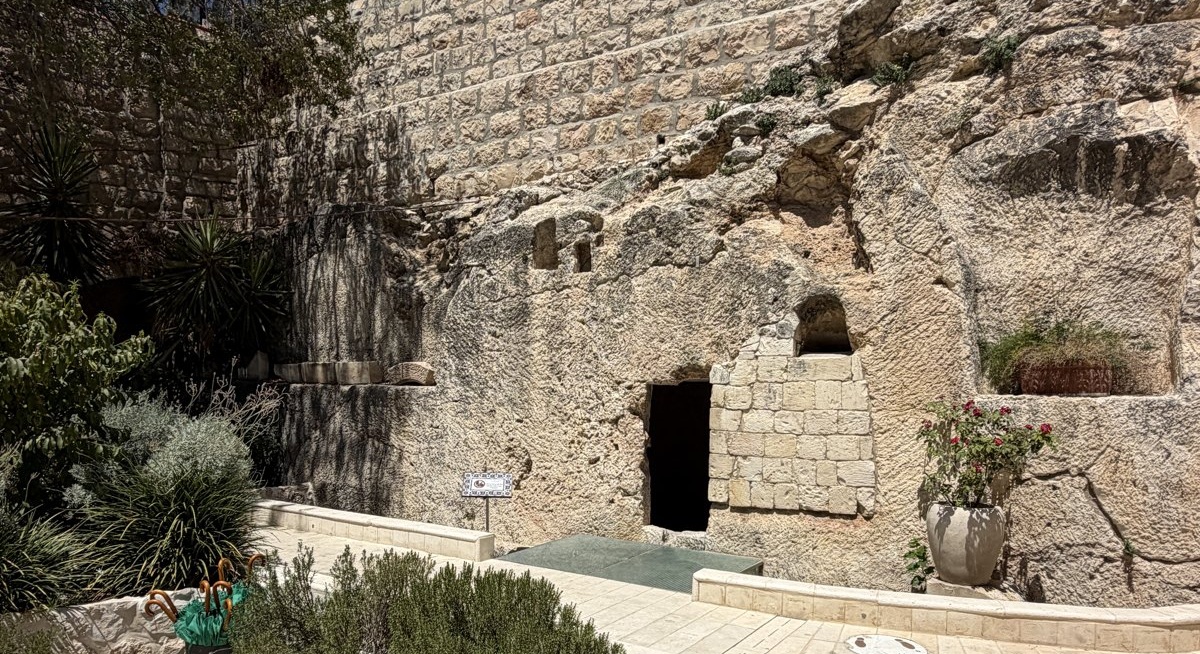
The tomb face, cut straight into the rock, with the garden kept
green around it.
It is shaded here, and after the Old City it feels like stepping into another climate.
The Garden of Gethsemane
Gethsemane sits at the foot of the Mount of Olives, across the Kidron Valley from the
Old City. The name means oil press. This is where Jesus prayed on the night before the
crucifixion, and the olive trees in the enclosure are genuinely ancient, with trunks that
have split and grown back around themselves so many times that they look less like trees
than like weather.
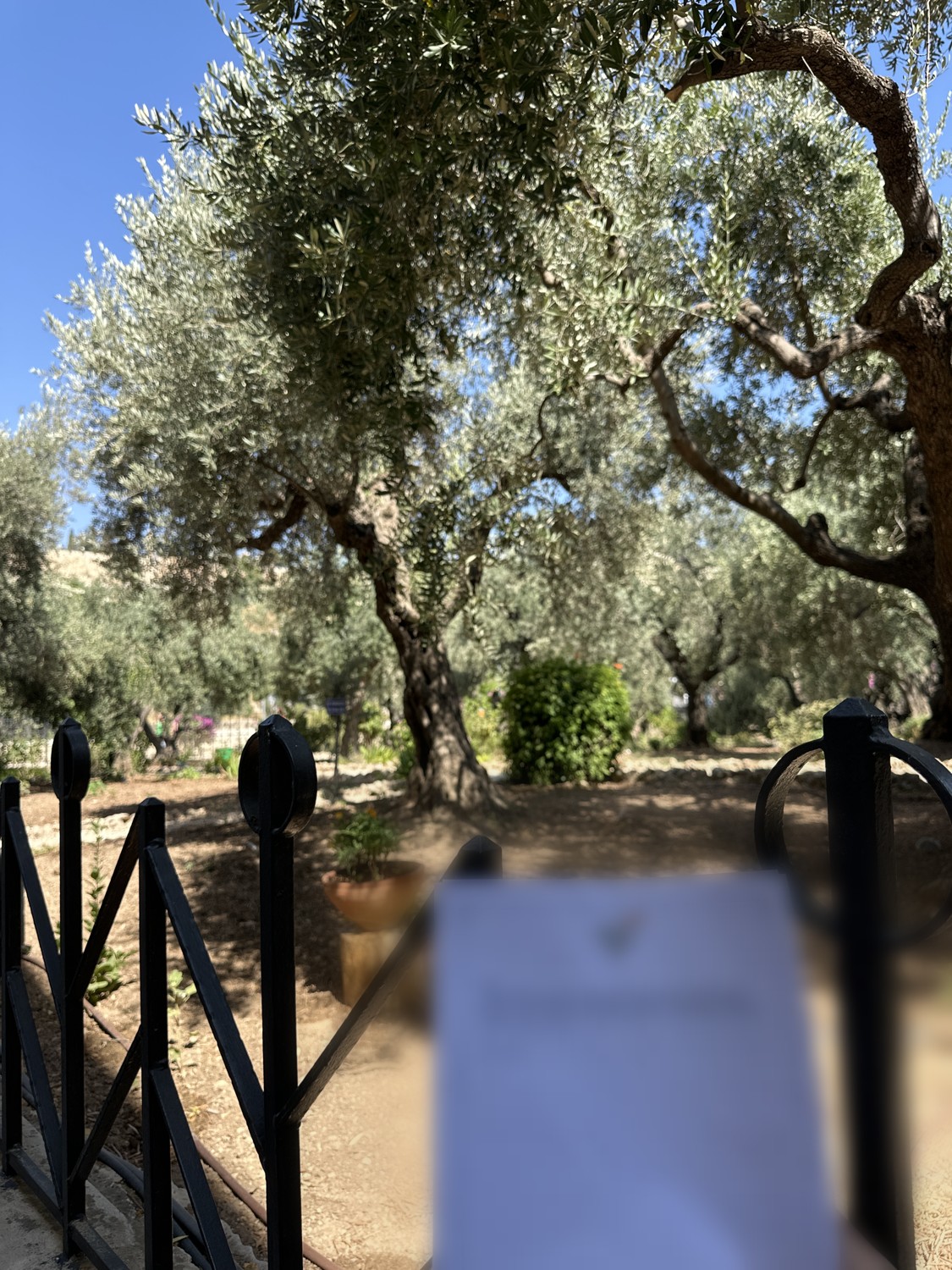
The old grove, and another prayer at the railing. Blurred for
the same reason.
Of all five sites this is the one people go quietest at. It is a garden where somebody
prayed in real distress, and everyone standing in it knows that.
The Mount of Olives
We finished at the top. The Mount of Olives looks west across the valley to the whole
Old City, with the Temple Mount directly opposite and the Dome of the Rock catching the
light in the middle of it. This is the view from which Jesus wept over the city, and it is
the one place on the route where you can see the shape of everything else you have walked
through that morning. The air moves up there, which after a morning in the Old City is its
own kind of mercy.
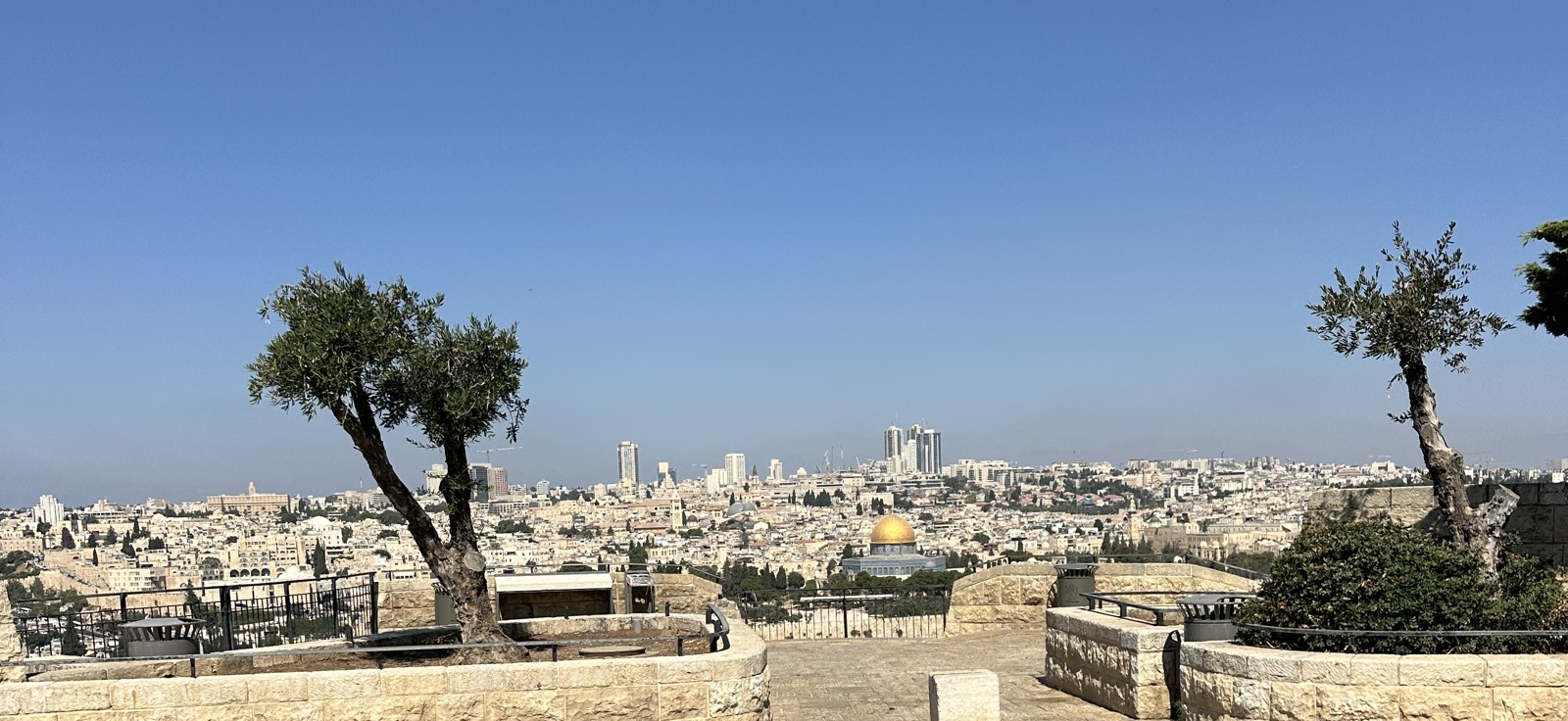
Looking west from the ridge: the Kidron Valley, the Old City, and the
Dome of the Rock in the middle of it.
The last prayers of the day were placed here, looking at that.
What happens now
Every prayer that reached us before the team left has now been printed, carried and
placed by hand. Nothing was left behind. The prayers that arrived after we set out are
already in the folder for the next visit, and they will be carried exactly the same way.
If you sent one and chose a photograph, it is being sorted now and will reach you after
the visit. If you sent one and chose nothing at all, it went to the same places, in the
same hands, on the same morning. It always does. We never charge for the prayer itself.
“Pray for the peace of Jerusalem: may those who love you be secure.”
Psalm 122:6