
There is a small garden in Jerusalem, just outside the northern wall of the Old City.
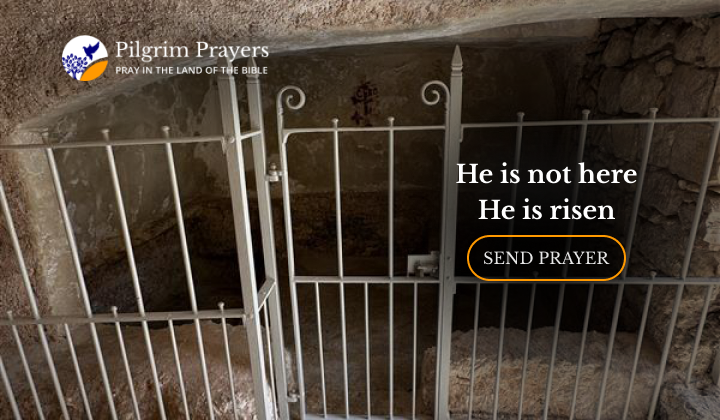
It sits near the Damascus Gate. In the rock face behind it, carved out centuries ago, there is a tomb. Two chambers cut into the stone. An entrance low enough that you have to stoop to go in.
Gardeners tend it carefully. Flowers bloom along the paths. The air is quiet.
Christian pilgrims who visit Jerusalem often come here, to a place called the Garden Tomb. They come because the Bible describes the burial place of Jesus as a garden tomb, a new tomb, in a garden near the place of crucifixion. They come to stand where they imagine the disciples stood on that first Sunday morning.
This Easter, they could not come.
Pilgrimages to Jerusalem were cancelled this spring. The conflict with Iran has changed the rhythms of daily life in Israel, including the rhythms of holy days. Where thousands of Christians normally make their Good Friday pilgrimage through Jerusalem, only a small group walked this year. The streets near the holy sites were quiet in a way they have rarely been at Easter.
The Garden Tomb was open. The tomb was still empty.
That sentence sounds simple. It carries everything.
John 20 tells the story of the morning of the resurrection.
Mary Magdalene arrives at the tomb early, while it is still dark. She finds the stone removed. She runs to tell Peter and the disciple Jesus loved. They come, look inside, and leave. She stays.
She is weeping when she turns and sees someone standing in the garden.
She mistakes him for the gardener.
“Woman,” he said, “why are you crying? Who is it you are looking for?”
She says: Tell me where they have taken him, and I will get him.
“Mary.”
That is all he says. Her name. And she knows.
She turned toward him and cried out in Aramaic, “Rabboni!” (which means “Teacher”) (John 20:16)
This is the scene the Garden Tomb is trying to help you imagine. Not architecture. Not history lesson. A garden. A woman. Her name, spoken by the one she had come to grieve.
That moment did not require a crowd.
The resurrection was not announced in a stadium. It was spoken quietly, in a garden, to one person who had stayed when everyone else had gone home. Mary was not in leadership. She was not an apostle. She was someone who could not bring herself to leave.
Sometimes prayer is simply staying; remaining in the place of grief and hope until you hear something.
Today, April 9, Passover comes to its close in Israel.
Jewish families who kept the holiday under wartime conditions are completing eight days of remembrance and hope. The ancient words spoken at every Seder, “Next year in Jerusalem,” carried a different weight this year. The families who said them did so while sirens sounded and gatherings were restricted, and the Western Wall Priestly Blessing, which normally draws tens of thousands, was limited to fifty people.
Passover and Easter. Two ancient stories of deliverance. Both observed in the same city, in the same week, under the same difficult sky.
“Pray for the peace of Jerusalem.” (Psalm 122:6)
This week, that is not an abstract invitation.
A prayer for this week
Lord,
The tomb is still empty. We believe that.
But we also know that Jerusalem is not at peace,
and that the people of this city are carrying something heavy.
We pray for the Jewish people today, at the close of Passover.
For families who kept the Seder under conditions no one would have chosen.
For the city that holds the memory of so many deliverances.
We pray for the garden near the Damascus Gate,
tended by those who kept it open even when no one came.
Speak the name of Jerusalem.
As you spoke Mary’s name in the garden.
As you always speak to those who stay.
Amen.
The Garden Tomb is tended by a small team of volunteers and staff. This Easter, they opened the gates to an almost-empty garden.
They did not close. The tomb was still empty. The garden was still there.
Your prayer for Jerusalem can still reach there, from wherever you are.
Pilgrim Prayers carries intercession to Jerusalem and submits it at the holy sites on your behalf. Every prayer is received in Israel and treated as a holy trust.
Submit your prayer for Jerusalem this Easter week.
“Early on the first day of the week, while it was still dark, Mary Magdalene went to the tomb.” (John 20:1)