
As part of our Jerusalem Stories series, Uri takes us to one of the most sacred and emotionally powerful places in the world, the Western Wall, located in the heart of the Old City of Jerusalem.
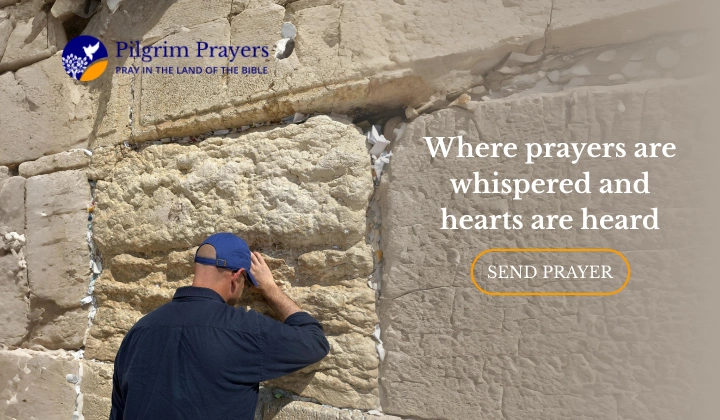
Known in Hebrew as the Kotel, the Western Wall is the last remaining supporting wall of the Second Temple complex. For Jewish people, it is the closest accessible place to where the Holy of Holies once stood. For Christians, it is a living witness to the world Jesus knew, taught in, and walked through.
The Western Wall and the Christian story
When Jesus came to Jerusalem, the Temple stood in full glory just above this wall. The Gospels describe Him teaching in the Temple courts, calling it “My Father’s house,” and revealing God’s heart for prayer, repentance, and restoration.
Standing before the Western Wall today allows Christians to connect physically with the setting of these Gospel moments. These stones were part of the world that framed Jesus’ ministry in Jerusalem. They remind believers that the Christian faith is rooted in real places, real history, and God’s covenant story with Israel.
The tradition of placing prayer notes
For centuries, people have come to the Western Wall to pray. Over time, a unique custom developed. Worshipers write prayers, petitions, and Scriptures on small pieces of paper and gently place them between the ancient stones.
This tradition is based on the belief that God’s presence dwells in a special way in this place, and that prayers offered here rise directly to heaven. Three times a year, the notes are respectfully collected and buried, never read, honoring the privacy and sacredness of each prayer.
In the video, Uri stands beside the Wall and explains how this custom began, why it continues, and what it means to people of faith around the world today. He shows how the smallest piece of paper can carry the deepest cry of the human heart.
An anecdote from the Wall
One well-known story tells of a rabbi who visited the Western Wall regularly for decades. When asked what he was doing there day after day, year after year, he quietly replied, “I am listening.” When pressed further, he explained, “I listen to the prayers of all who come here. They are always the same. Please God, heal us. Please God, help us. Please God, give us peace.”
This simple response captures the heart of the Western Wall. It is not a place of perfect people, but of honest prayer. People come carrying sorrow, hope, gratitude, and longing, trusting that God hears.
A living place of prayer
Today, millions visit the Western Wall each year. Jews, Christians, and visitors from every nation stand before these stones, often in silence, sometimes in tears. The wall does not speak, yet it testifies to generations of faith, endurance, and prayer.
For Christians, to send prayer request here echoes the words of Jesus, who longed for Jerusalem to be a house of prayer for all nations.
Sending your prayer to the Western Wall
Through Pilgrims Prayers, believers who cannot physically come to Jerusalem can still take part in this ancient tradition. When you send your Jerusalem prayer requests to be placed in the Western Wall, your words are carried to the stones that stood during the time of Jesus.
Sending Western Wall prayer requests connect your faith to Scripture, to history, and to a living tradition of intercession. It allows you to join millions who have stood before these stones, trusting that God sees, hears, and responds.